MEDIA ENVIRONMENT Background Sri Lanka, a pear-shaped island known as Ceylon in English, lies at the southeastern tip of India. Although its climate and people resemble those of India, under the influence of Buddhism, it has developed a distinct culture (6). Sri Lanka's tropical climate and agriculture revolve around the seasonal pattern of rainfall versus temperature. Two groups inhabit the different climactic zones. The Sinhalese majority is concentrated in the wet zone, while the Sri Lankan Tamils live exclusively in the northern and northeastern limits of the dry zone (near the Jaffna Peninsula) (6).
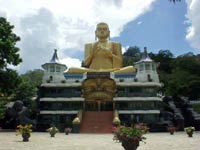
In the third century B.C., Buddhism reached Sri Lanka and gradually spread over the island. Buddhism brought with it an advanced society with irrigation systems and storage reservoirs to make maximum use of scarce water (6). In the 14th century, a Dravidian ruler from India succeeded in establishing a Tamil kingdom at the northern end of the island. The Sinhalese moved their capital south into the wet zone, near modern Colombo (6). The Portuguese, in a quest for spices, came to Sri Lanka, Ceylon, in 1505, and by the end of the 16th century, the King of Portugal had laid claim to the entire island. Merchants of the Dutch East India Company also touched the east coast and became rivals with the Portuguese in the 17th century, for domination of Ceylon's trade. The Dutch were victorious. Later, during the Napoleonic wars, Britain would capture Ceylon from the Dutch rulers. A rebellion against British rule led to Ceylon's being declared a Crown Colony in 1802, and the last Sinhalese king was captured and imprisoned (6). The colony raised coconuts, cotton, coffee, sugar and indigo, and proved to be successful in the eyes of the British. In the 19th century, Ceylon revived Buddhism, Hinduism and interests in the arts and literature (6).
A constitution was constructed in 1946, which protected the interests of Tamils and other minorities and established a legislative system that continued when independence came peacefully in 1948 (6). Two political parties, the United National Party (UNP) and the Sri Lanka Freedom Party, dominated politics during the 1960s. They differed over the rights of Tamils and economic issues; the Freedom Party sought solutions that were more socialist. They continue to be the biggest political parties to this day (6). The civil war during the 1980s and 1990s between the Tamil Tigers (the Liberation Tigers of Tamil Eelam) and the Sinhalese government stunted political and economic growth in Sri Lanka. The growth of a more assertive Sinhalese nationalism after Sri Lanka gained independence fueled the ethnic division. The Parliament catered to Sinhalese nationalism by banning parties that advocated separatism (like the Tamil Tigers). The Tamil had been seeking autonomy (self-rule). Tamil guerrilla activity -- terrorist acts and suicide bombings in Colombo -- and massacres ensued (6).
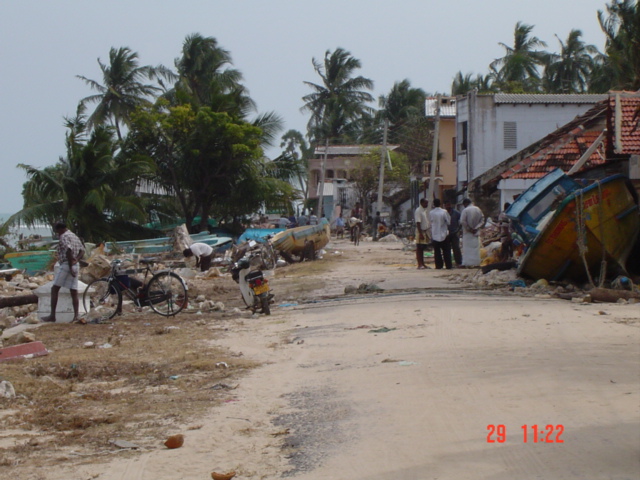
The
tsunami of Dec. 26, 2004, generated by an undersea earthquake off Indonesia,
also left Sri Lanka reeling and unsure of the future. More than 30,000
people died as a result of this tragedy. To this day, people are working
to clean up the wreckage, identifying the dead and dying, and rebuilding
the nation.
|