|
1
|
|
|
2
|
- Learning Objectives
- To trace the roots of American
business to
- European mercantilism
- To identify and describe major eras
in the
- development of American business
- Preview
- Mercantilism in the Colonial
Period
- The impact of the American
Revolution on trade
- and manufacturing
- The Industrial Revolution &
Entrepreneurship
- The Gilded Age & Captains
of Industry (video)
- The Production, Marketing,
& Global Eras of
- American Business
|
|
3
|
- The French enterprise under Jean Baptiste Colbert—the embodiment/creator
of mercantile capitalism
- Mother country provides capital & manufactured goods
- Colonies provide raw materials and markets for finished products
- North America: sugar, tobacco, grain, furs
- Africa: slave labor
- Formation of Joint-stock companies
- Primary motive: Demand for quick returns è
- speculation and many business failures
|
|
4
|
- 1629: the Massachusetts Bay Company, a religious enterprise, established
a Puritan Commonwealth in America
- Joint-stock enterprise, with the
colonists as the only
- stockholders
- Success correlated with the Puritan
ideology that God
- required hard work,
thrift, and faith.
- Rise of the independent colonial merchant
- Trading consortiums or
partnerships with British
- merchants
- Exports: timber, furs, wood
products, tobacco, indigo
- Imports: manufactured goods from
Britain and Ireland
- (mainly iron products,
textiles, coffee, tea, paper,
- sugar molasses, wine, glass,
earthenware)
|
|
5
|
- Plenty resources but no labor è importation of indentured servants and slaves
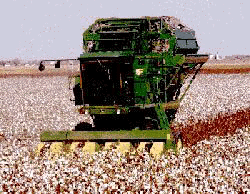
- Labor-intensive tobacco and cotton plantations in southern colonies (VA,
Carolinas)
- Cultivation of indigo as dye for British textile industry
|
|
6
|
- Fought for economic reasons
- Britain’s demand for exclusive trading rights with American colonies
- Cheap raw materials è
England
- High-priced finished goods è colonies
- Effects on business
- Removal of major obstacles to economic expansion (British regulations
and taxes)
- High costs: Loss of money, lives, commercial alliances, banking/credit
associations, and the protection of British law and naval power
|
|
7
|
- Post-revolutionary shift from
foreign trade to domestic industries
- Growth of domestic household manufacturing
- Inception of a distinctive American system of manufacturing
- British and European vs. American
manufacturing
- Skilled, plentiful, cheap labor vs. semi-skilled labor, lack of
capital, efficiencies, technology
- Finishing processes vs. volume production of standardized products,
interchangeable machine parts, multiple inventions/processes
- 1776: Adam Smith (“the father of capitalism”), The Wealth of Nations &
the “invisible hand” è principles of Laissez-faire
|
|
8
|
|
|
9
|
- Establishment of the cotton
textile industry in New England
- 1813 Samuel Slater’s
water-powered mill: first mechanical weaving process in America
- 1813 Francis Cabot Lowell’s
Manufacturing Company in Waltham, MA: standardized product, first
cost-accounting system, specialization of labor, departmental
(functional) organization.
- By 1839 ten new cotton and
woolen mills in Lowell, MA
|
|
10
|
- Innovators and entrepreneurs --Large numbers of inventions
revolutionized business
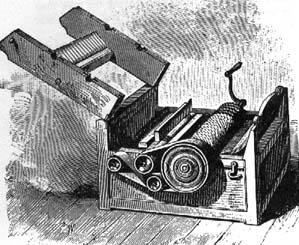
- Eli Whitney: the cotton gin (1793); the concept of interchangeable
parts
- Robert Fulton (1806): demonstrates commercial feasibility of steamboats
- Samuel Colt: the revolver (1836)
- Cyrus McCormick: the reaper (1831)
|
|
11
|
- Innovators & entrepreneurs as
catalysts for a new system of
manufacturing
- Expansion of iron and transport
industry (rail, steamboat) -- dramatic increases in mechanization and
major impact on business
- Enormous demand for coal, iron,
steel -- Heavy capital investment
- Creation of domestic, inland
markets for industrial goods
- Increase in American exports,
savings, and capital investment
- Shift from an agrarian to an
urban environment
|
|
12
|
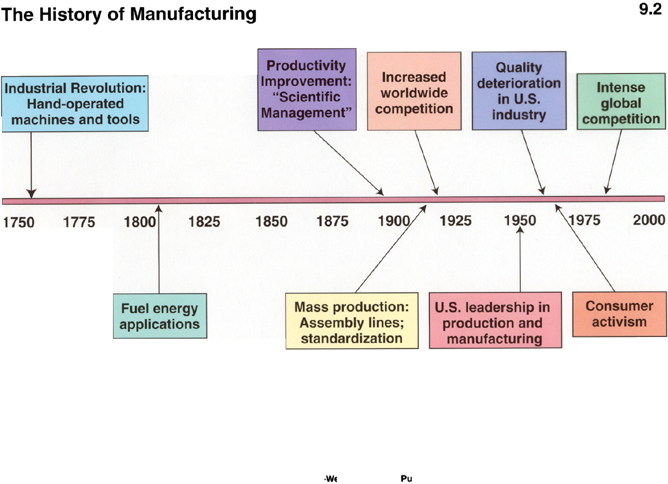
- Factories: places of concentration of workers
- Machines replacing labor: increased production, semi-skilled/unskilled
labor, standardized production
- Mass production: lower cost of production with increased volume (economies
of scale)
- Scientific management: Frederick W. Taylor
- Specialization of labor: increased efficiency, alienation
- Major catalysts of change: the railroads and the banking industry
|
|
13
|
- Inventions, increased production, and WWI
- â increased demand (D > S)
- Continued specialization
â standardization â mass production
- 1909: Henry Ford’s Model T; 1913 the moving assembly line
- The rise of modern management: Henri Fayol
- â Focus: the production process
- (engineering) and increasing
efficiency
|
|
14
|
- Intensive production of production era
- â excess supply
- â increased marketing (promotional efforts to move goods =
advertising)
- Post WWII boom period
- â increase in discretionary income
- â Shift in focus: the customer; satisfying customers with differentiated
products
- Beginnings of market research and integrated marketing (4 P’s--product,
price, placement, promotion)
|
|
15
|
- The global economy
- International trade
- Global competition
- Global communication
- Increased efficiencies in
financing,
- production, distribution, and
marketing
|
|
16
|
- Take notes on the following questions; then discuss in groups of 4:
- Who are the Industrial Giants and what industries did they control?
- What characterized these Industrial Giants?
- What effect did the trusts of the Industrial Giants have on farmers,
miners, and ordinary people?
- What was the change in government attitude toward business under
Presidents McKinley and Theodore Roosevelt?
- What business conditions were exposed once the Industrial Giants were
challenged by the government?
- Characterize this period of time.
|
|
17
|
- The capitalist system: laissez-faire
- Banking as big business to finance the expansion of the railroads
- Establishment of large
investment banks: J. P. Morgan
- First billion dollar corporation: Carnegie Steel (Andrew Carnegie)
- Andrew Mellon: ALCOA (Aluminum Company of America)
- J. D. Rockefeller: Standard Oil Company
|
|
18
|
|
|
19
|
- The colonies: supplier of raw materials
- The economic system: mercantilism
- England: supplier of capital, trade
- Labor: skilled workers (craftsmen),
indentured servants, slaves
- Crops: cotton, tobacco, indigo
|
|
20
|
- Paul Revere: established rolling mill for sheet copper
- John Winthrop: established America’s first iron works
- John Hancock: import-export business with England, the West Indies, and
Holland
- William Boyd / William Fitzhugh: tobacco planters / merchants
- Jonathan Lucas: perfected the rice milling process; sold rice mills in
South Carolina
|
|
21
|
- 1775-83: The Revolutionary War: economic reasons
- Results of independence: loss of trading partner, source of manufactured
items
- Beginnings of entrepreneurship in the US
- Beginnings of the Industrial Revolution: multiple inventions
|
|
22
|
|

 Notes
Notes